Home » News » Prof. Yitshak Kreiss Named Among 100 Most Influential CEOs in Oncology
Prof. Yitshak Kreiss Named Among 100 Most Influential CEOs in Oncology
Prof. Yitshak Kreiss, Director General of Sheba Medical Center, has been recognized among the 100 Most Influential CEOs in Oncology in 2025. The recognition reflects international acknowledgment of leadership defined by stewardship, accountability, and impact in the field of oncology.
Published: March 3, 2026
Prof. Yitshak Kreiss, Director General of Sheba Medical Center, has been recognized among the 100 Most Influential CEOs in Oncology in 2025. The recognition reflects international acknowledgment of leadership defined by stewardship, accountability, and impact in the field of oncology.
The list, published by OncoDaily, highlights leaders whose decisions carry responsibility for patients, for institutions, and for the integrity of science. In this context, Prof. Kreiss’s recognition reflects Sheba Medical Center’s continued role as a leading academic medical center with a sustained and deeply embedded commitment to cancer care.
A Leadership Journey Rooted in Medicine
Prof. Kreiss’s leadership is grounded in his medical training and long-standing personal connection to Sheba Medical Center. After completing his medical education at the Hebrew University of Jerusalem and specializing in internal medicine at Sheba, his career evolved to encompass clinical practice, academic engagement, health system management, and national emergency preparedness.
This combination of experiences has shaped a leadership style that remains closely connected to the realities of medicine while addressing the broader responsibilities of guiding a large and complex healthcare system. It is an approach that emphasizes responsibility, careful decision-making, and long-term institutional thinking, qualities that are particularly critical in oncology, where care is complex, resource-intensive, and deeply human.
Under Prof. Kreiss’s leadership, Sheba has continued to strengthen its standing in clinical excellence, research, and innovation, with repeated international recognition reflecting sustained institutional performance across care delivery, education, and scientific contribution.
Oncology at the Heart of Sheba’s Mission
At Sheba Medical Center, oncology is not treated as a single department or service line, but as a core institutional priority that intersects with multiple disciplines and functions. This perspective is reflected in Sheba’s development as a comprehensive academic medical center, where cancer care is supported by strong links between clinical services, research infrastructure, and organizational leadership.
During Kreiss’ tenure, Sheba has advanced its vision as a “City of Health,” an integrated model that brings together multidisciplinary care, translational research, and advanced technologies within a unified institutional framework. In oncology, this approach supports close collaboration among oncologists, hemato-oncologists, surgeons, radiologists, nuclear medicine specialists, and research teams, fostering continuity across diagnosis, treatment, and ongoing care.
Digital health tools, AI data-driven systems, and emerging technologies are increasingly embedded into clinical workflows, supporting coordination and informed decision-making across complex oncology pathways.
Recognition, Clinical Depth, and Centers of Excellence
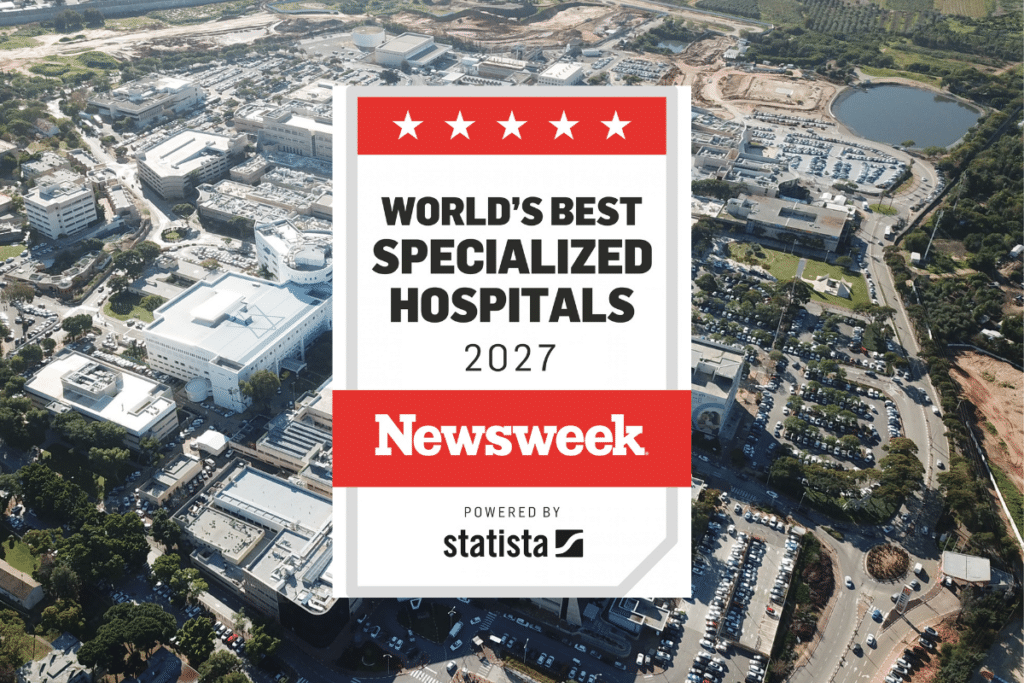
Sheba’s oncology programs have been recognized internationally for their scope and quality. Newsweek has ranked Sheba among the World’s Best Specialized Hospitals in Oncology, citing excellence across clinical outcomes, innovation, and patient-centered care. This institutional recognition reflects sustained investment in oncology services and infrastructure over time.
At the physician level, Sheba specialists are also recognized for their expertise. Inclusion of Sheba physicians in Forbes Israel’s 2025 Best Doctors List across oncology and hemato-oncology highlights the depth of clinical leadership within the organization and the environment that supports professional excellence.
The Jusidman Cancer Center exemplifies how this institutional commitment is translated into daily practice. Under the leadership of Prof. Raanan Berger, the center integrates advanced cancer care with active research, reinforcing a culture in which scientific rigor, multidisciplinary collaboration, and holistic attention to patients and families guide clinical work.
Building the Future of Oncology Through Precision and Stewardship
Among the notable developments during Prof. Kreiss’s leadership is the expansion of advanced nuclear medicine and radiopharmacy capabilities at Sheba, including theranostic applications. These efforts reflect an institutional commitment to strengthening the diagnostic and therapeutic foundations that support modern oncology care.
Theranostic approaches, combining targeted imaging with precision therapies, are part of a broader focus on aligning diagnostics and treatment strategies more closely with disease biology. Investment in this area underscores Sheba’s emphasis on building the infrastructure and expertise required to support increasingly sophisticated oncology models, while maintaining careful oversight and clinical responsibility.
Across all of these efforts, Prof. Kreiss’s leadership is marked by a values-based approach to governance. Responsibility toward patients and families, integrity in scientific and clinical decision-making, and sustained investment in people, systems, and knowledge shape how oncology services are structured and evaluated at Sheba Medical Center.
Recognition among the 100 Most Influential CEOs in Oncology reflects leadership exercised at this institutional level. It affirms an approach centered on stewardship, one that balances innovation with responsibility and positions oncology care within a broader mission of academic medicine and public trust.
Your support strengthens Sheba’s ability to deliver advanced patient care, respond in moments of crisis, and accelerate medical innovation with global impact.