Sheba Medical Center and the Kessler Foundation Partner to Expand Revolutionary Spinal Stimulation Rehabilitation for People with a Spinal Cord Injury
Collaboration aims to bring promising therapy from research into everyday care.
Published: June 10, 2026

RAMAT GAN, Israel and EAST HANOVER, New Jersey —— Sheba Medical Center and the Kessler Foundation today announced a strategic collaboration to expand research and clinical program development in spinal cord stimulation for people living with a spinal cord injury.
As interest grows in treatments that may improve life after a spinal cord injury, the two organizations are working together to help move promising research into everyday care. Sheba and the Kessler Foundation will collaborate on training, protocol sharing, and studies to evaluate how spinal stimulation paired with intensive activity-based training may help improve movement, mobility, and other functions in appropriately selected patients.
Training is already underway as clinical and research teams at Sheba begin building the expertise needed for a spinal stimulation research center. This groundwork will eventually enable integration into clinical and rehabilitation practice.
The organizations are also sharing treatment approaches and planning studies to better understand who may benefit and how patient outcomes evolve over time. A pilot program is expected to begin within the next 6 months.
Under the agreement, Sheba Medical Center will serve as Kessler Foundation’s exclusive collaborating site in Israel. The effort builds on Sheba’s large-scale rehabilitation services, along with its broader research and innovation hubs, and the Kessler Foundation’s research at its Tim and Caroline Reynolds Center for Spinal Stimulation.
“People with a spinal cord injury are looking for treatments that can move beyond the lab and into real-world care, underscoring the need for restorative approaches that address the substantial, lifelong challenges they and their families face,” said Prof. Amitai Ziv, Director of the Integrated Rehabilitation Hospital at Sheba Medical Center.
“Spinal stimulation is a rapidly evolving area of neurorehabilitation, and progress depends on strong clinical partners who can help evaluate outcomes and scale best practices,” said Rodger DeRose, president and CEO at Kessler Foundation. “This collaboration is focused on sharing protocols, training teams, and generating data that can guide where—and for whom—these approaches may be most beneficial.”
World-Renowned Experts Driving the Collaboration
When Sheba Medical Center set out to become a global leader in spinal cord injury recovery, it partnered with Kessler Foundation’s internationally recognized experts:
- Steven Kirshblum, MD, chief medical officer and co-director of the Reynolds Center, a leading authority in spinal cord medicine and research.
- Susan Harkema, PhD, director of consortium growth at the Reynolds Center, a pioneer in neuromodulation research and global program development.
- Gail Forrest, PhD, director of the Reynolds Center, an expert in neural plasticity and functional recovery through stimulation technologies.
- Einat Engel-Haber, MD, research scientist at the Reynolds Center, will transition from the Kessler Foundation to Sheba Medical Center to lead the implementation and expansion of spinal stimulation research and clinical programs at Sheba.
Dr. Engel-Haber brings a unique combination of clinical and technical expertise, holding a medical degree with a specialty in physical medicine and rehabilitation, as well as a Bachelor of Science in computer science and mathematics from Tel Aviv University. Her leadership will be instrumental in transferring knowledge, protocols, and innovation from the Kessler Foundation to Sheba, ensuring rapid and effective deployment of these advanced therapies.
Sheba Medical Center further strengthens the collaboration through its own distinguished experts:
- Gabi Zeilig, MD, head of Innovative Projects in Rehabilitation and an internationally recognized clinician‑scientist in spinal cord medicine.
- Meir Plotnik, PhD, neuroscientist and director of the Advanced Technologies in Rehabilitation (CATR) research center, specializing in postural and locomotion control.
Together, these leaders bring decades of scientific innovation, clinical expertise, and translational research experience to the collaboration.
Dr. Kirshblum said the approach requires coordination. “It involves patient evaluation, device programming, and intensive rehabilitation working together,” he added. “By aligning protocols and measuring outcomes in a consistent way, collaborations like this can help the field understand what works best, and how to deliver it safely.”
What This Means for Patients
Spinal stimulation is an area of active research in neurorehabilitation. The collaboration aims to move evidence-based practices into broader clinical use by:
- Training clinicians and researchers in delivering spinal stimulation safely and effectively
- Supporting clinical studies and translational research to evaluate patient outcomes
- Expanding access to specialized spinal stimulation rehabilitation programs
- Generating and sharing insights to refine protocols and future innovation
Next Steps
Sheba and the Kessler Foundation share a goal of advancing rigorous research and responsible clinical translation so that more people living with a spinal cord injury can be evaluated for—and potentially benefit from—emerging neurorehabilitation approaches. Further details about planned activities will be shared as plans move forward.
The organizations also welcome discussions with philanthropic funders interested in accelerating evidence-based neurorehabilitation and expanding access through carefully evaluated programs.

Other Stories

Noor’s Story: A Dream Fulfilled, A Life Remembered
When 16-year-old Noor arrived at Sheba Medical Center from southern Syria, she was battling a rare and aggressive cancer with few remaining treatment options. Through a humanitarian effort to care for those affected by the war in Syria, Noor received advanced medical treatment and compassionate support from the Safra Children’s Hospital team.
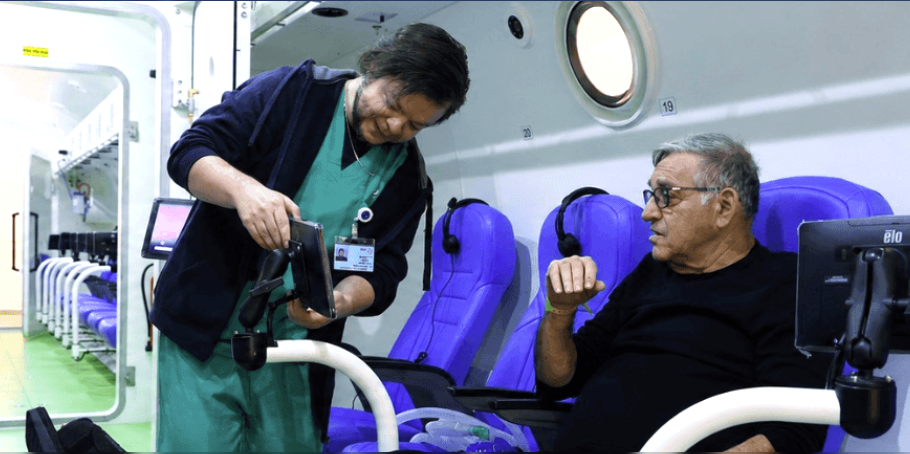
Advancing Care for Complex Wounds with Sheba’s New Hyperbaric Medicine Center
Sheba Medical Center’s new Hyperbaric Medicine Center allows patients to receive advanced oxygen therapy in a highly specialized environment—accelerating healing, restoring damaged tissue, and expanding access to life-changing rehabilitation when it’s needed most.
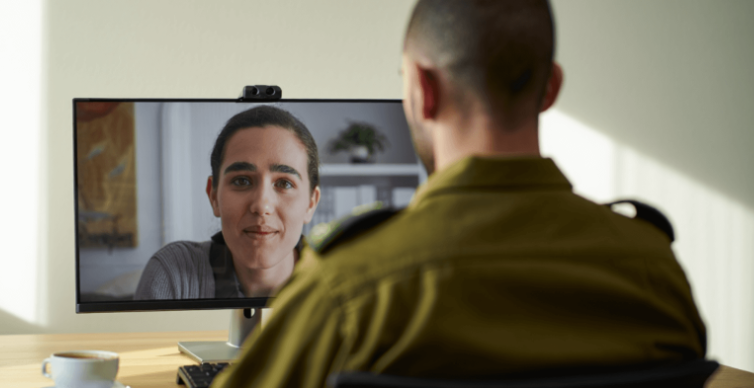
Supporting Those Who Served
After service ends, many lone soldiers face the emotional toll of military life without the support systems most rely on. Through the Lone Soldiers Program Resilience Center, Sheba Medical Center provides free, specialized mental health care.